Andrew Dewdney and Claire Grey reflect on the work of the Cockpit Department of Cultural Studies, and its continuing relevance today.
A couple of months ago, I reported on an online archive documenting the work of the Cockpit Department of Cultural Studies, which was based in London from the mid-70s until its demise (along with its principal funder, the Inner London Education Authority) at the end of the 1980s. The Department was best known for its innovative work using photography in schools; yet this was also informed by a broader radical critique of education and of media representation, which drew on the then-emerging field of Cultural Studies. In my view, the work of the Cockpit still has a lot to teach educators today. I’ve followed up my earlier post with an e-mail ‘interview’ with the main creators of the site, who were both working at the Cockpit during this period: Andrew Dewdney and Claire Grey. I’d like to thank them for their responses.
. . . . .
Maybe we could start by you explaining a bit about the context. How did the Department of Cultural Studies come into existence in the first place? How did it relate to the youth theatre? How was it funded? And if the website gives a good insight into the actual exhibitions, could you say a bit more about the other things you were doing – teacher education, work directly with students in schools, publishing, work with other photography workshops or independent photographers, and so on?
The Cockpit Arts Workshop was established in 1970 as the first purpose-built youth arts workshop and theatre-in-the-round by the Inner London Education Authority (ILEA 1964-90). It served as a teachers’ centre, youth centre, and a public theatre. It was run along the lines of combined arts with four teams, Theatre-in-Education, Outreach Drama, Music and Visuals. The Visuals Team was created in 1971 by Howard Romp to work with the performing arts and museums in staging Tableaux Vivants with school students. It was subsequently renamed the Art Department which was the precursor of the Department of Cultural Studies.
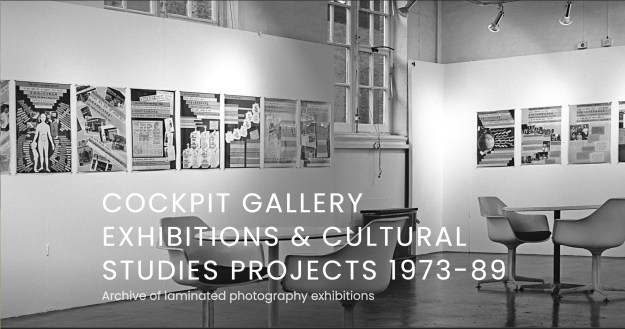
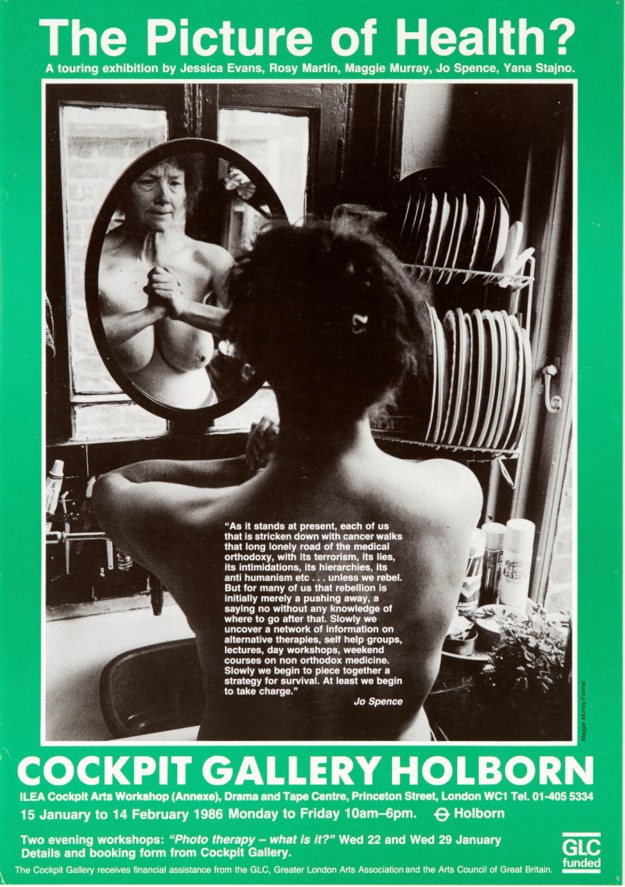
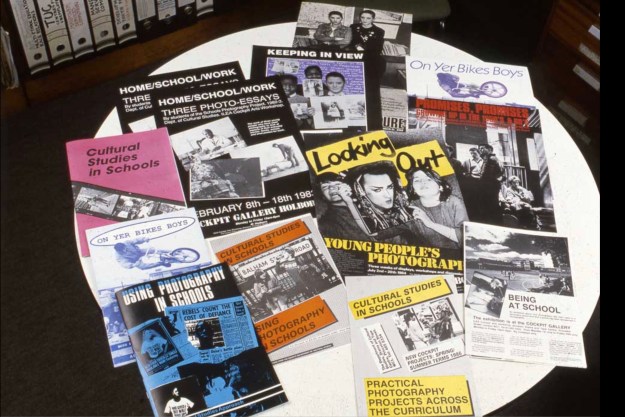
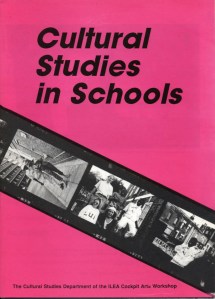
The Department of Cultural Studies was founded in 1978, when it moved to the ILEA Drama and Tape Centre, in Princeton Street, Holborn, where a photographic studio, darkroom and gallery were established. The Department ran schools’ projects and teachers’ courses promoting engagement across the curriculum with media and the culture of young people, through the uses of practical photography. Exhibitions and publications made with young people were shown and distributed through the gallery, which developed a touring exhibition system, initially to allow ILEA schools to hire shows free of charge, and subsequently available nationally to arts, community and educational groups.
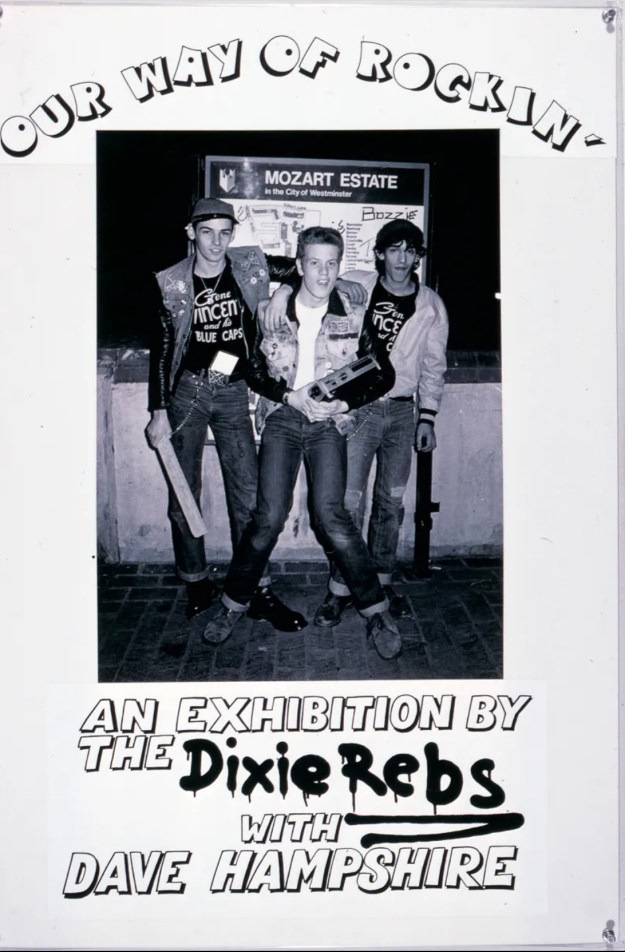
The gallery at Holborn increased the visibility of the Department within the London photographic community and links were made with community photography projects such as Camerawork and Blackfriars Settlement, as well as with tutors and students of the photography degree course at the Polytechnic of Central London (PCL). With support from the Greater London Council (GLC) the Department was able to fund Dave Hampshire, a photographer and recent PCL graduate to work over a sustained period on a subcultures project with a group of young Rock-a-Billies. The gallery also exhibited the work of several independent photographers, such as Maggie Murray, Henry Grant and Armet Francis. Gloria Chalmers, also a PCL graduate, succeeded Jo Spence as the gallery administrator, before going on to found the influential Portfolio magazine and gallery in Edinburgh.
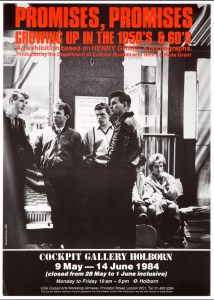
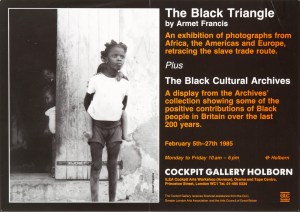
Looking back at the work on the website is a reminder of the kind of educational radicalism that was very prevalent in the 1970s and 80s – anti-racism and anti-sexism were explicit strategies for the education authority (ILEA), and the GLC (the local government of London) more widely represented a kind of ‘municipal socialism’. Of course, it wasn’t perfect and it wasn’t unopposed – and eventually it was all shut down. Could you say a bit about the possibilities that were opened up here, but also about some of the tensions and contradictions you had to negotiate?
Prior to the abolition of the ILEA in 1988 and the establishment of a national curriculum by the Conservative government, subjects taught in primary and secondary education were teacher led and organised regionally by local authorities and exam boards. The ILEA held oversight through a subject inspectorate and teachers’ subject centres to support curriculum development. This organisation meant that we had a great deal of autonomy in running our own programmes in conjunction with participating teachers. The Cockpit had a print room and technician to produce publicity for its programmes, which was regularly sent out to over 500 schools and colleges via the GLC post room. Thus, we had freedom over the content of our work, a strong communication network and the legitimacy of an education authority. Looking back, the degree of independence we had was astonishing in comparison with the current bureaucratised control of education.
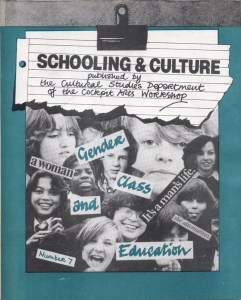
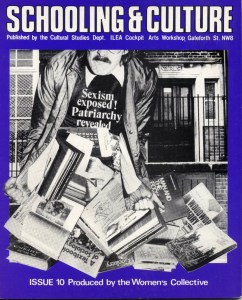
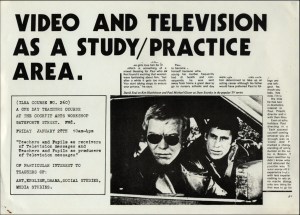
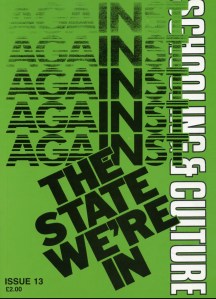
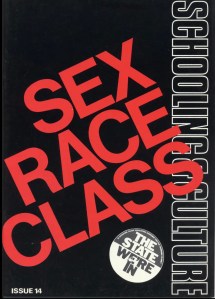
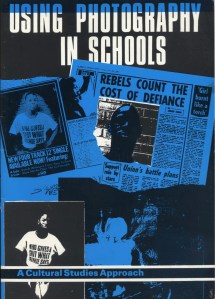
But our work was not without its tensions. Up until 1978 the ILEA Art Inspectorate had oversight of the Department’s work with schools. By then the Department was shifting from a programme of one-day workshops for the Art subject on exploring art historical works and museum collections, to projects with English and Social Studies teachers focused upon the culture of young people. We developed longer term relationships with fourteen schools under the umbrella title of The Schools Photography Project. Projects began to take on an ethnographic and research dimension with notes kept on school sessions, subsequently drawn upon in writing analytical papers and strategy documents. The Department also launched a tri-annual teachers’ journal, Schooling and Culture, which produced fourteen issues between 1978 and 1984. Schooling and Culture was run on a thematic basis, with an advisory board and changing editorial groups for each issue. In the first issue of Schooling and Culture, Martin Lister (one of the Department’s key staff) wrote an article, ‘Art, Schooling and Contemporary Culture’, which argued that the Art subject, based upon craft and individual creativity, was not connecting with the culture of young people. This led the Department to negotiate working under the Multicultural, rather than the Art inspectorate, which proved to be a much more sympathetic fit.
The aim of the Art Studies Programme (1975 -1978) had been to expand what was permissible in the Art subject, making it more responsive to young people’s everyday life. The trajectory of this work emphasised the importance of lived experience and the dominance of mass media within it. Media Studies was just emerging as a topic of interest, primarily amongst English teachers. The ILEA English Teachers Centre, established in 1975, was also developing teaching material on media. It should also be noted that most ILEA schools had the post of a media resources officer to support the use of audio-visual aids in classrooms. The British Film Institute was promoting film studies and the journal Screen Education (published by SEFT, the Society for Education in Film and Television) encouraged new approaches to film and television studies. The ILEA also promoted cross curricular perspectives on multiculturalism which led to growing interest and demands for new teaching materials.
It is within these currents that the Department’s work positioned itself as promoting a culturalist and situational approach to practice, as distinct from reforming or modernising existing subject syllabi. Our pupil-centred pedagogy held a central cultural tension over what pupils chose to photograph. In effect there were no half measures in offering pupils control over what they photographed and some of the results that came back challenged our values and those of the school. There was a sensitivity both ways in pupils making their private life the subject of schoolwork and the pedagogy we developed focused upon editing contact sheets and making selected prints for their own photo-albums. Through this practical process we were able to develop classroom discussion on what the images showed and what they might mean in different contexts. This was media studies ‘in action’ as we saw it.
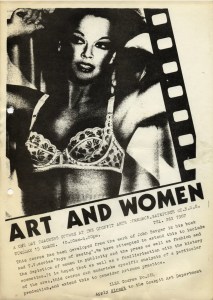
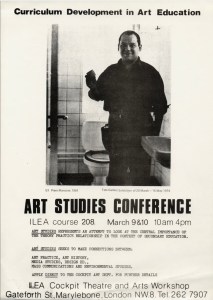
 It would take more space than we have here to articulate the differing educational positions adopted in the social and political context of the period. In summary, there were three powerful currents operating within progressive education: about social control, about identity and representation, and about what counts as knowledge. Of course there were great synergies between such currents, but they did lead to distinct positions and lobbies. The question of social control was sharply focused upon the reproduction of inequalities and pupils’ rights, reflected in de-schooling, free schooling and community school movements. Questions of identity and representation tended to focus upon anti-racist and anti-sexist approaches to positive representation, gathered up around multiculturalism. The question of what counts as knowledge was expressed in terms of developing a curriculum and pedagogies matching the interests and needs of the majority of [working class] young people. Although the Department was caught up in all these tendencies, it was the later which galvanised our work.
For a decade and more the Department of Cultural Studies, consisting of a fluctuating group of six to eight people, together with teacher and advisory collaborators were able to develop a critical overview of the politics of schooling and its structural inequalities and respond with an extensive programme of cultural and artistic work. By the end of the progressive project of the ILEA, the Department’s perspective became openly political in analysing the crisis of education and challenging the dismantling of the public sector.
I’m hoping you can say something about the potential (and maybe also some of the limitations) of photography as a medium in this context. Why was photography the chosen medium – as distinct from video or film or other visual arts? What did it make possible? And how did it relate to existing photography courses in schools, which often seemed to be an awkward mix of art and science?
It is important to note that we did not approach photography as a subject. Very few schools offered photography as an option within the “O”-level art and craft subject. Photography as a subject was based upon a mixture of formal aesthetics – what makes a ‘good’ photograph – combined with a technical knowledge of cameras, chemical properties and light measurement. Almost without exception we worked with English, Drama and Social Studies teachers. We approached photography as a popular cultural practice. It was the uses of photography and what it afforded in engaging with young people’s everyday life which interested us. It was a popular medium we could organise and resource as a means of production which young people could control.
The Schools Photography Project ran between 1978 and 1985. It was based upon the practise of lending 35mm cameras to participating students to use at home over weekends to shoot 36 black and white images about anything they were doing. In subsequent sessions they developed their films, made contact sheets and selected prints. Students would make their own albums leading to more ambitious exhibition or publication projects. We were interested in engaging young people directly in the media production process as a means of reflecting on the power of media through the issue of who gets represented and does not.
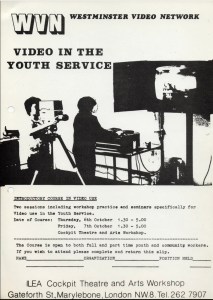
Whilst we experimented with the video equipment of the time, it was cumbersome, inflexible and not as controllable or consumable for young people. We confined our use of video to a Cockpit studio setting where improvised drama could unfold. Video and 8mm film made it harder for young people to produce material which could vie with the media they consumed. Photography on the other hand could be shared, seen anywhere and could reach a professional look. The core ingredients of using photography were: the intimate communal process in the darkroom; acquiring a range of practical skills; having access to ‘professional’ equipment and being able to take the results home. There was a freedom for them in the process, and it engendered an openness to discussion of what was being documented and represented. We had one lad who borrowed a camera to photograph a horse race from underneath the racetrack fences. Terrifyingly dangerous, but great pics.
It’s interesting that this was a department of Cultural Studies rather than, say, ‘visual arts’, or even Media Studies. Could you say a bit about why you chose this? What was your position in relation to academic work, as represented for example by the CCCS? How were you aiming to bring ‘theory’ together with ‘practice’? I’m particularly interested in your stance towards Media Studies. I can recall you doing a brilliant photoplay critique of Andrew Bethell’s Eyeopeners books, which were widely used in Media Studies lessons in the early 1980s: you called them ‘Mouthshutters’. How was your approach different from what was then passing for Media Studies?
We named our project and department ‘cultural studies’ to signal the importance of popular culture as an area to be taken seriously in schools at a time when schools generally saw youth culture as unruly, threatening to the traditional values of learning and of little intrinsic worth. But in Higher Education the study of popular culture was beginning to be taken seriously. The Birmingham University Centre for Cultural Studies was founded by Richard Hoggart in 1964 ostensibly to underscore that portrayals of working-class life were worthy of scholarly study. Stuart Hall directed the Centre from 68 to 79 and during that period we were in touch with the working groups he established and subscribed to the CCCS Working Papers. Raymond Williams’s definition of culture as ‘a whole way of life’ was a defining principle of our work. We had set out to develop curriculum approaches based upon knowledge as self-generated. Our interest was in finding ways for predominantly disadvantaged working-class young people to define themselves and what counted as useful knowledge. We experimented with making positive representations rather than providing material to be studied. Paulo Friere’s approach in his book Pedagogy of the Oppressed (translated into English in 1970) was a parallel.
In this sense you can see that our work was very distinct from the path taken by Media Studies, which set out to create a new subject to be taught. We were critical about creating classroom teaching packs on media literacy which maintained the same relationship between teacher authority and passive pupil reception. Our approach was more unruly and based upon engendering young people’s expressive agency.
With the demise of the Cockpit, you all went on to other things. But did the Cockpit leave a lasting legacy? Has it influenced what’s happened since? How would it have been different today, perhaps especially given the ubiquity of photographic imagery, and its distribution via social media?
The ILEA offered redeployment or redundancy after the Cockpit closed. Claire Grey and Amina Patel took redeployment to Kingsway Further Education College where for some years they were able to continue to teach with Cockpit methods. Eileen Hooper-Greenhill left in 1977 to work with the National Portrait Gallery. In 1986 Martin Lister left to take up a lecturing post at Cardiff Institute of Higher Education. Adrian Chappell had previously worked with Phil Cohen on the ‘No Kidding’ project at the Institute of Education and took redeployment at the Willowbrook Urban Studies Centre. Alan Tompkins, who had been seconded to Greater London Arts, went on to be the Director of Interchange, where he attempted to re-establish the gallery. In 1987-88 Andrew Dewdney had an ILEA secondment to the Inner-City Education Centre in Sydney, carrying out an anti-racist schools project with Debby Michels, which led to the exhibition More Than Black and White. He went on to work at The Watershed Media Centre in Bristol. Information about others who had worked with the Department or Gallery prior to its closure can be found on the Cockpit Archive website.
The longer-term legacy of Cockpit Cultural Studies remains hard to discern in today’s context. The progressive educational perspectives of the 1970s and 80s, of which we were part and helped promote, no longer register in mainstream educational thinking. It is sad but true to say that British education continues to reproduce structural and persistent inequality. A million young people are currently not in education or training and a third of 16-year-olds leave school not having attained 5 GCSE qualifications at a basic standard. The collectivist and community perspectives enshrined in the idea of comprehensive education have little traction in the instrumental and vocationalist thinking of Academy schools. Art, music and drama have been given a lesser place in schools in favour of what are considered core subjects related to the economy and employment, whilst the Humanities are being stripped out of universities. Education is as much in crisis now as it was in the 1980s and for the same reasons.
 In curricular terms the political campaigning of feminists, anti-racists and socialists of the 70s and 80s has more than an echo in current day Equality, Diversity and Inclusion policies and programmes. Equally, by the end of the 90s Media Studies had entered mainstream education as a distinct subject and expanded as a university degree. We would like to think that our perspective of approaching critical thinking through practical engagement with the means of image and text production is now recognised within it. In the early 90s we contributed to the curriculum statement on photography in the national curriculum in collaboration with the Arts Council in Creating Vision: Photography and the National Curriculum (published by Cornerhouse Manchester in 1994).
How would the Cockpit Cultural Studies approach fit today’s radically different media landscape? The basic principle of engaging young people directly in both the technical means of visual production and its social and ideological mode of representation remains highly relevant. The culture of the Internet and widespread use of mobile connectivity are now the dominant means of communication which young people have little choice but to navigate. The need for education to develop critical curriculum practices to enable young people to gain a knowledge and understanding of how they are positioned as users in the network is of paramount importance.
Undoubtedly, creative, practice-led approaches to engaging young people with contemporary visual culture would start with the smartphone and social media. The smartphone has the advantage that it is ubiquitous, but the disadvantage that its workings – the software producing the plethora of images – is not so easily open to inspection. Analogue media – photography, film and video – could reveal its image forming processes and the modes of its production in ways young people could directly participate in. Young people now have more exposure to image making than at any time in history, but less access to how it operates in terms of data and software. Questions of who owns and controls images are even more relevant today. The urgent question for education and schooling now is to understand and gain control of AI, in effect to develop AI literacy. How that can be developed with teachers and their pupils is a matter both for progressive curriculum research projects and greater local control of the curriculum by teachers, communities and parents.
There is a direct and unbroken line of connection between the ideas and perspectives generated by Cockpit Cultural Studies and ongoing critical research and progressive educational projects now focused upon the new means of visual communication. The media has changed but the underlying social and cultural issues of ownership and control remain the same. Current interest in the work we did is evident in several registers within community arts, photographic cultures and media and cultural studies research degrees in higher education.
For instance, in 2017, the London arts organisation theshowroom.org organised a project to publish a second volume of Schooling and Culture, in conjunction with a group of nineteen teachers and the Amsterdam-based Werker Publishing Project. Some forty years beyond the Cockpit’s work, the editorial of Volume 2, Issue 1 had this to say about the current state of schooling:
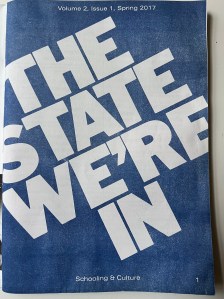
Finding time to exhale and reflect on our commitment to education for young people, or even for that matter to do the washing up is a challenge in itself between assessment forms and home/work tension…. And yet, here we are, refusing to be intimidated by precarity which typifies our time and defying neutrality and academia which numbs our struggle. Schooling and Culture disrupts a culture of individualism, competition and surveillance by claiming a new collective position within, and outside of, the school context through self-representation and lived experience.
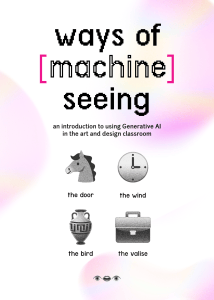 A further project with links to the historic work of the Cockpit can be found in the Ways of Machine Seeing collaborative project initiated by Geoff Cox, co-director of The Centre for the Study of the Networked Image and Annie Davey, Lecturer in Art, Culture and Education at UCL Institute of Education. The project has further links with The Photographers’ Gallery London and works with students and teachers devising classroom approaches to the impact on visual culture of Artificial Intelligence models.
We remain convinced that there are teachers, youth workers and community arts workers up and down the country who find hard won spaces within a highly prescribed and overcrowded schooling system to work with young people on pressing matters of contemporary concern. To all of you out there – we salute you.
Resources
Our main concern over the past decade has been to ensure that a record of the work we did does not disappear from history, which has led to our continuing archival work on the website https://cockpitarchives.co.uk.
Material on Schooling and Culture is held by the May Day Rooms archive of radical publishing at: https://maydayrooms.org,
The University of the Arts archives holds a collection of exhibition material related to exhibitions at: https://archives.arts.ac.uk/calmview/Record.aspx?src=CalmView.Catalog&id=CPG and
The Bishopsgate Institute also holds a collection of Cockpit materials: https://www.bishopsgate.org.uk
Publications
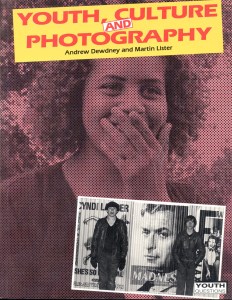
Dewdney A. & Lister M. (1986) Youth Culture and Photography. Macmillan
Isherwood, S. and Stanley, N. eds. (1994) Creating Vision: Photography and the National Curriculum, (1994) Cornerhouse. Manchester Arts Council
Dewdney, A. & Phillips, S. (1994) Race, Representation and Photography ICEC. Sydney
Dewdney, A., Grey, C. & Minion, A. (1994) Down But Not Out. Trentham Books
Lister, M. ed. (1996 and 2012) The Photographic Image in Digital Culture. Routledge. London
Dewdney A. Forget Photography (2023) Goldsmiths Press

