
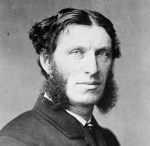
How and why do the ideas of the nineteenth-century critic and educator Matthew Arnold continue to influence education today?
In October 2010, in a speech at the Conservative Party Conference, Britain’s new Secretary of State for Education, Michael Gove, laid out some of the key emphases of his incoming government’s policies. Education, he argued, was about making ‘the best that has been thought and said’ available to all young people: only in this way would true social equality be achieved. As an English graduate himself, Gove appeared especially passionate about the role of English literature. ‘The great tradition of our literature – Dryden, Pope, Swift, Byron, Keats, Shelley, Austen, Dickens and Hardy – should be at the heart of school life,’ he proclaimed. ‘Our literature is the best in the world – it is every child’s birthright and we should be proud to teach it in every school.’
 Gove remained as education minister for just four years. He seemed to possess an unerring desire to pick fights – not only with the educational ‘experts’ whom he despised en masse, but also with teachers’ professional bodies and parents’ organizations. He was eventually sacked on the grounds that his personality was regarded as too ‘toxic’. After various other ministerial roles, he emerged in 2016 as one of the architects of Brexit; and perhaps needless to say, he is now a Lord.
However, it’s no exaggeration to say that Gove was by far the most influential British educational policy-maker of this century; and many of his ideas have since become a kind of ‘common sense’ in education, not least through the work of his acolyte Nick Gibb, who continued as a schools minister until 2023. It’s hard to imagine a situation in which eighteenth-century writers like Dryden and Pope would be ‘at the heart of school life’ for modern teenagers; but Gove’s enthusiasm for imparting ‘cultural capital’ and for a ‘knowledge-rich curriculum’ is widely shared, not least by many in the current Labour government.
I’ve discussed Gove’s legacy (and some of the contradictions and tensions within it) elsewhere on this blog. Here, I want to go right back to the source of this line of argument about culture and education. Gove’s formulation ‘the best that has been thought and said’ (or more frequently, in his version, ‘written’) derives from Culture and Anarchy by the Victorian poet and critic Matthew Arnold (1822-1888): Gove’s debt to Arnold was particularly explicit in speeches like this one. Meanwhile, his reference to ‘the great tradition’ of English literature comes from the literary critic F.R. Leavis (1895-1978), who was himself heavily influenced by Arnold (I’ve discussed Leavis and his followers in previous posts). What, we might well ask, is going on when a twenty-first-century education minister appears to be drawing inspiration from ideas that were first formulated 150 years previously (in the case of Arnold), or even 80 years ago (in the case of Leavis)?
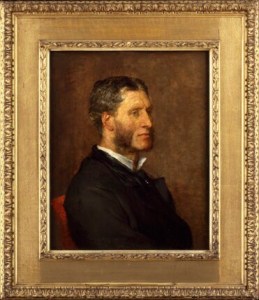 Arnold is a familiar starting point for Cultural Studies textbooks, like John Storey’s Cultural Theory and Popular Culture (now, amazingly, into its tenth edition!). In some respects, he provides a kind of stalking horse, an easy means of identifying what Cultural Studies is not – which is to say, something snobbish and elitist and dominated by authoritarian ideas about cultural value. However, what’s often neglected here are the specifically educational dimensions of Arnold’s work. He is predominantly discussed as a literary or cultural critic, and (perhaps to a lesser extent today) as a poet. Yet he earned his primary income as a full-time Schools Inspector for 35 years; and much of his writing is specifically concerned with education in schools. For Arnold (as to some extent for Leavis as well), the study of culture was very much an educational project – and indeed, a political one.
Matthew Arnold was the son of the Headmaster of Rugby, one of England’s leading elite private schools. After graduating from Oxford University (as did Gove), he wrote poetry and dabbled in literary circles for a while; but it was his wish to marry and hence the need to earn a living that led him (reluctantly) to become a government Inspector of Schools – a role he occupied until his retirement in 1886. Arnold gradually abandoned writing poetry; and aside from his required inspection reports, his subsequent writing focused on broader questions about culture and education and (latterly) religion.
As part of his inspection work, Arnold was charged to undertake a couple of study tours in continental Europe, which he later used as the basis for a broader critique of the English school system, arguing specifically for the systematic state provision of secondary education (at least for the middle class). He also wrote more journalistic pieces, notably in opposition to the ‘Revised Code’ of 1862, which required that teachers be paid partly on the basis of their students’ examination results. (This was a struggle that Arnold lost: the system remained in force until the end of the nineteenth century.) It would be an exaggeration to call Arnold an activist, but he was very much involved in what we might broadly call ‘liberal’ campaigns for educational reform and for public education.
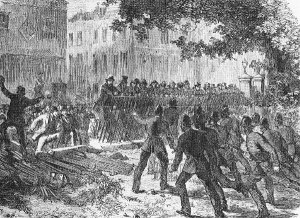 Arnold spent much of his time as an inspector travelling across the country, often visiting schools in disadvantaged areas (and he frequently complained about the grinding routine). Yet he himself was from a very affluent, privileged background, and it is hard to miss his growing alarm at the social movements that were arising in Britain in the middle of the nineteenth century. In 1866, he was living close to London’s Hyde Park, where demonstrators for universal suffrage broke down the park railings and fought with police. At least partly in response to this, the 1867 Reform Act slightly extended the right to vote – albeit only to 9% of male adults at the time. For Arnold and his class, the very gradual advent of democracy posed challenges that needed to be contained – not least, in Arnold’s view, by education. As the Liberal Party politician Robert Lowe (Lord Sherbrooke) put it at the time, it was necessary to ‘prevail upon our future masters to learn their letters’.
In many instances, not least for Arnold, this was combined with fears about secularization (Darwin’s Origin of the Species had been published just ten years before Culture and Anarchy, although it was widely derided at the time), and with an unease about industrial expansion and the commercially-driven growth of the British Empire. While Arnold was generally keen to uphold the principle of ‘democracy’, he shared the post-Romantic view that the country was in a dire state of cultural decline. This sense of loss and melancholy – what Raymond Williams called ‘soured Romanticism’ – is very much in evidence in his most famous poem ‘Dover Beach’, published in 1867. By contrast, his educational project was more explicitly political – although it was not simply a matter of ‘soothing savage plebeian breasts’, or indeed restoring the status quo, as is sometimes suggested.
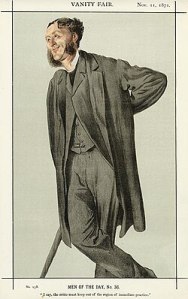 Arnold has been routinely charged with snobbery – and it’s easy to find examples of what some of his contemporaries called ‘priggishness’ in his work. However, his position here is somewhat more complex. His map of the class divisions of Victorian society hands out criticism fairly even-handedly. Aside from his patronizing and disdainful depiction of the ‘populace’ (the working class) – and indeed his undisguised fear of the brutish ‘mob’ – he also has little time for the ‘barbarians’ (the decadent aristocracy, whom he feels have failed to exercise their responsibility for leadership). Yet he reserves particular criticism for the ‘philistines’, the bourgeois middle class who are preoccupied with material possessions, and who value industry and business above all else. Such people, he argues, have been deluded by ‘cartloads of rubbish’; and they are in urgent need of the ‘sweetness and light’ of true culture. Like most later English writers in this tradition, Arnold particularly targeted ‘Americanization’, which he saw as deriving from a false (we might now say populist) version of democracy. Faced with this rather depressing prospect, he looks to what he calls a ‘remnant’, a kind of cultural or intellectual elite led by ‘a general humane spirit, by the love of human perfection’ – and he calls on them to exercise a renewed form of cultural authority.
Arnold’s proposals for educational reform suggest that different tactics needed to be employed in each case. He wasn’t particularly concerned to challenge the privilege of the elite private schools favoured by the barbarians; and he seemed content to leave the populace to a basic (albeit much improved) elementary education (which, after considerable struggle, started to become compulsory in 1870). Again, his principal focus was on the philistines, the emergent capitalist middle-class; and one of the primary themes of his campaigning was on the need for high-quality secondary education specifically for such children.
It was education about culture – albeit regarded very much in aesthetic rather than anthropological or sociological terms – that would provide the principal means of protection against the decline into anarchy. Culture was not merely a form of personal escape or even spiritual compensation: it was a force that transcended society but would also help to rescue it, by offering a new source of authority. Arnold’s most famous statement on these issues came in a series of essays published not long after the Hyde Park riots, initially in the Cornhill Magazine and then collected in the book Culture and Anarchy. Perhaps the most often-quoted summary of his position is contained in the following passage from the introduction:
The whole scope of the essay is to recommend culture as the great help out of our present difficulties; culture being a pursuit of our total perfection by means of getting to know… the best which has been thought and said in the world, and, through this knowledge, turning a stream of fresh and free thought upon our stock notions and habits, which we now follow staunchly but mechanically…
Culture and Anarchy is heavy going for contemporary readers: pompous and repetitive, it contains a large amount of sarcastic point-scoring against now mostly forgotten (and in some cases unnamed) opponents, as well as a good deal of obscure theological debate. Several of its key assertions – especially about the role of education in promoting ‘democracy’ and indeed reducing what he calls ‘enormous inequality’ – appear highly contradictory.
 More unfortunately, Arnold’s proposals for education itself don’t provide much more detail than the quotation above. He insists repeatedly that education is a pursuit of ‘perfection’, that it is about knowing ‘the best’, about spreading ‘sweetness and light’ and coming to one’s ‘best self’; but he doesn’t provide any criteria by which we might recognize these things, let alone how we would enable young people to ‘pursue’ them or ‘come to know’ them. The aim here, Arnold writes, is ‘not to make what each raw person may like, the rule by which he fashions himself; but to draw ever nearer to a sense of what is indeed beautiful, graceful, and becoming’. In this, he seems to be proposing what we might now call a kind of critical thinking, which will challenge ‘stock notions and habits’; although quite how this might be achieved is not explained at all. Meanwhile, critical thinking clearly had its limits: throughout his life, Arnold remained an evangelical Christian, for whom the pursuit of perfection and ‘pure knowledge’ was intended to ‘make reason and the will of God prevail’.
While Arnold did undoubtedly have some quite concrete proposals for reforming the structures of the education system, his suggestions as regards curriculum and pedagogy were mostly vague and ill-defined. He was aware that he could be accused of literary dilettantism, and it was a charge he strongly refuted. His approach is seemingly inclusive: he refers to the arts in general, and at various points to the sciences as well. But (as for Michael Gove) it is clear that literature – and specifically English literature – is to be the beating heart of education.
Classics in Ancient Greek and Latin (albeit with less of the rote learning and recitation) should still be available to the select few in private schools; but it was only English literature – especially poetry and ‘the Bible as literature’ – that was truly capable of delivering on the humanizing function of education. Poetry should be learnt by heart, with an increasing number of lines set as the target for each year group. Yet the precise nature of the texts in question remains unclear: curiously, Arnold mentions writers like the then-popular romantic novelist Walter Scott, but not Shakespeare; and he stops well short of providing a canonical list like Michael Gove’s.
However, the establishment of English as a school subject was still a long way off; and it arose through a prolonged campaign to displace the privileged position of Classics. If Arnold is arguing for this in relation to schools in the 1860s, F.R. Leavis is still making the case in campaigning for university reform seventy years later. But for now, that is another story.
It’s possible, as Stefan Collini suggests, that Arnold’s influence has been overstated; although one might equally argue that his ideas have retained their currency because they coincide with much broader trends in educational and political thinking. I’m not sure we all need to be revisiting Matthew Arnold today: there are plenty of more exciting and digestible things to read. However, his ideas – and the broader tradition of thought about culture and society from which they come – continue to influence education right now.
For example, Ofsted, the Schools Inspectorate (and thus the descendants of Arnold himself), are still required to assess schools’ effectiveness in inculcating ‘cultural capital’ – something which they define as ’the essential knowledge that pupils need to be educated citizens, introducing them to the best that has been thought and said, and helping to engender an appreciation of human creativity and achievement’ (for more on this, see here). Meanwhile, the government’s most recent proposals for curriculum reform continue to rehearse ideas about a ‘knowledge rich’ approach, and about ‘cultural capital’ (in relation to English literature), although the arts themselves remain largely relegated to the category of ‘enrichment’. It may be unnecessary any longer to struggle with Culture and Anarchy, but exploring the social and political motivations of these ideas remains important if we want to understand how we got to where we are today.
+++++++++++++++++++++++++++++++
A comprehensive selection of Arnold’s work on education (including the full text of Culture and Anarchy) can be found in Matthew Arnold on Education, edited by Gillian Sutherland (Harmondsworth: Penguin, 1973). I have drawn here on some key works on the British tradition of cultural criticism, especially Raymond Williams’s Culture and Society (1958), and Lesley Johnson’s The Cultural Critics (1979). Work on Arnold and education is all pretty old now: I have drawn on W.F. Connell The Educational Thought and Influence of Matthew Arnold (London: Routledge, 1950); F.G. Walcott The Origins of Culture and Anarchy: Matthew Arnold and Popular Education in England (London: Heinemann, 1970); and Margaret Mathieson The Preachers of Culture (London: Allen and Unwin, 1975). Much more recently, Phil Beadle has returned to Arnold in entertainingly combative fashion in The Fascist Painting: What is Cultural Capital? (Woodbridge: John Catt, 2020). Stefan Collini discusses his place in the establishment of English in universities in Literature and Learning: A History of English Studies in Britain (Oxford, Oxford University Press, 2025). And for a thoughtful analysis of Arnold’s work in relation to cultural policy, see Oliver Bennett (2005) ‘Beyond machinery: the cultural policies of Matthew Arnold’, History of Political Economy 37(3): 455-482.

