 A new documentary follows the uncertain career of an X Factor star, raising uncomfortable questions about the price of fame.
Dalton’s Dream, screening in UK cinemas this week (February 2024), is directed by reputed British documentary maker Kim Longinotto, along with debut director Frankie Murray Brown. It’s another Dogwoof production, which should be appearing sometime soon on the BBC4 Storyville strand (the official website is here).
Filmed over a four-year period, the film traces the career of Dalton Harris, a Jamaican singer in his early 20s, from his early rise to fame in his home country through to winning the 2018 UK X Factor (and the recording contract that goes with it). It then explores the public abuse that followed, particularly surrounding his sexuality, and his struggle to win the right support from his record company. The single he eventually releases fails to make the chart; and from the glittering heights of stardom, he begins to spiral downwards. The end of the film finds him in reduced circumstances, performing in small regional venues.
This is by no means a ‘biopic’, or even a music documentary: there are only short extracts from Dalton’s performances, although we do see a good deal of him practicing, recording and preparing to go on stage. In line with Longinotto’s previous films (Shinjuku Boys, Divorce Iranian Style), it might be described as ‘observational’ or even ‘cinéma vérité’, although it’s more tightly structured than that sometimes implies.
 For Dalton, success is decidedly double-edged. On his return to Jamaica to perform at the major Reggae Sumfest festival, the film follows him revisiting his now-derelict childhood home and describing his poverty-stricken and abusive upbringing. He barely knew his father, and his mother would regularly beat him and throw him out of the house; and he is eventually taken in by another family, who turn out to be related. We see his rise to fame through winning a TV talent contest, and thence on to the X Factor, but images of his childhood recur throughout, suggesting that his trauma lingers on.
Dalton’s success in the UK is not rapturously received in his home country. The problem here is that, as he puts it, ‘I wasn’t as toxically masculine as I was supposed to be’. He becomes the target of some truly repulsive homophobic abuse, including explicit death threats, shown here both in videos from social media and in texts in on-screen captions. While there are some (mostly women) who make counter-arguments, and while this changes somewhat when Dalton triumphs at Reggae Sumfest, it’s clear that he is confronting a deep-rooted aspect of Jamaican society, where male homosexuality has remained illegal since colonial times. (The film briefly attempts to contextualise this by using archive footage of slavery, and some news footage of homophobic attacks, but there is clearly more to be said.)
Meanwhile, Dalton’s estranged mother becomes prominent on social media, and eventually on television: she denies the charges of abuse, and accuses him of lying about her. Yet she is equally concerned about becoming the target of abuse and violence herself, and her defence of him is decidedly limited. By the end of the film, it seems that Dalton has forgiven his mother, and there is a reconciliation of sorts; although one wonders how likely it is that such wounds will ever be healed.
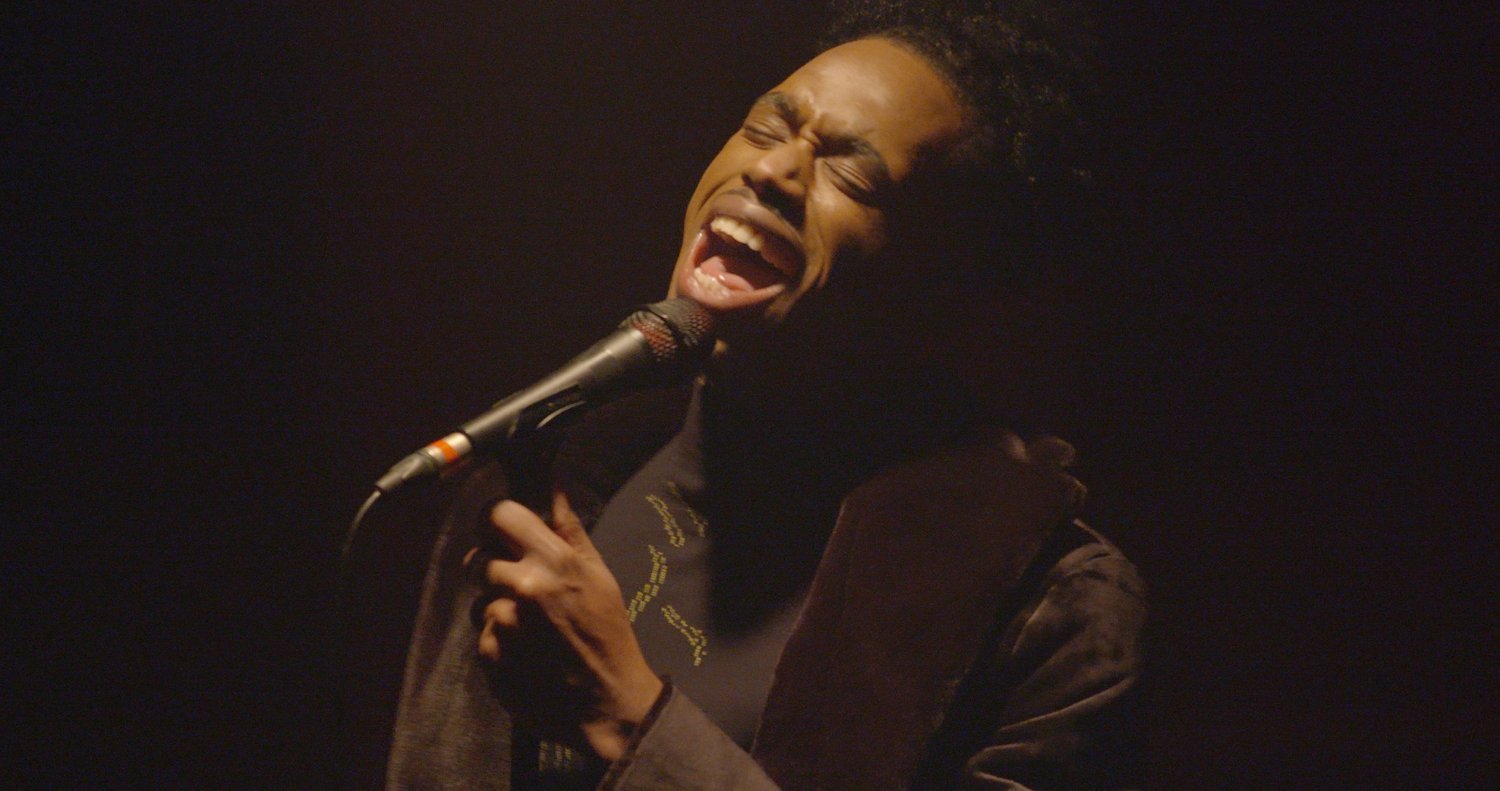 While there are moments of euphoria, the overall tone of the film remains downbeat and melancholy. In several instances, the wild adulation that accompanies Dalton’s on-stage appearances is faded down to silence, or to foreboding incidental music (deep bass tones, solo cello and piano), suggesting some of the anguish that lies behind the showbiz glamour. However rapturous the acclaim, he struggles to come up with a marketable recording, and begins to doubt his talent. Dalton is essentially isolated, and suffers from rapid mood swings; he feels ‘toxic to himself’ and ’mentally unhealthy’. Although it’s not clear if he is using drugs, he decides to go into a rehab clinic for his mental health more generally; and by the end of the film, we learn that he has attempted suicide on several occasions.
On one level, the film raises familiar but still troubling questions about how vulnerable young people are treated by the media industries. Dalton is signed by a company owned (needless to say) by Simon Cowell, the infamous X Factor impresario, and provided with a luxury apartment in London; but he also complains at several points about not having enough money to pay for food.
 The people who come to surround Dalton – his personal assistant, his manager, his producers – are all keen to build his confidence. But he is also wary of being exploited, and keen to hold on to his ‘integrity’ and his sense of who he ‘really is’ as an artist. In one scene, for example, there is an extended struggle between Dalton and his manager about whether he will wear a white or a black outfit for a crucial appearance: in this instance, Dalton wins out (he wears all-white), but the issues at stake for him – about how he performs his sexuality, and what such choices mean for him as a dark-skinned black man appearing on a brightly-lit stage – are clearly much broader.
To some extent, the story is about Dalton’s ‘coming of age’ – although when he moves into his fancy apartment, his ambivalence is apparent: ‘I’m a grown-up person,’ he says. ‘I’m an adult now. Can I afford this?’ In reality, of course, he is essentially owned by his management company. Ultimately, he discovers – quite accidentally – that Cowell has sold the company, and he is promptly dropped: he has to give up his apartment, and his support team disappears.
Of course, this isn’t exactly new territory: the ethics of the celebrity industry have rightly come in for considerable criticism in recent years, most notably in the wake of the suicide of the British presenter Caroline Flack in 2020. (There’s a documentary on this here; and a current – somewhat ambivalent – BBC podcast series about X Factor here.) However, in this case, we are invited behind the scenes, into an intimate relationship with Dalton; and as we watch him spiral into decline, some awkward questions about our own position begin to arise. What is the nature of the contract between the film-makers, Dalton himself, and his record company, in agreeing to make the film in the first place? How did this change as his career unravelled? And how is this carried through into a kind of informal contract with us, the viewers of the film?
 Dalton’s Dream is uncomfortably intimate at times: we don’t see him at the depths of his despair, but he certainly tells us about his depression and his suicide attempts. The only time we hear from the film-makers is when Dalton discusses his decision to go into rehab; the film-makers are supportive, but the exchange poses questions about their own responsibility towards Dalton – and, indirectly, about ours as well. Is the film itself not partaking in a kind of voyeurism of its own?
The other troubling question here is to do with identity. As I’ve noted, Dalton frequently voices the desire to be seen as he ‘really is’, and to express some kind of truth about himself. Very much in line with other X Factor-style music, and with the ethos of reality TV more broadly, there is a premium here on emotional intensity, honesty and sincerity: identity is essentially the currency of celebrity culture, the key commodity that is bought and sold. This is writ large in the songs Dalton chooses and those he writes. ‘Make love your goal,’ he sings. ‘I’ve got nothing to lose but myself.’ ‘All I want to do is be free’. This is evident in the following teaser (there is no trailer as yet):
And yet Dalton is profoundly uncertain about his identity; and the way he is hounded on social media only accentuates this. ‘I’m a creep, I’m a weirdo, I don’t belong’, he sings in one of his X Factor performances early in the film. ‘I’m everything you want me to be, but me… I guess I’m just a monster’. For Dalton, it seems that the essential truth of his identity lies in his sexuality. Behind the scenes, he has boyfriends, and yet he is initially evasive about other people’s ‘assumptions’ about his sexuality: he cannot afford to come out, at least in the context of Jamaica – although this is clearly less of an issue in the hyper-camp world of X Factor.
By the end of the film, the single Dalton eventually releases openly proclaims ‘I’m gay’; and in the final scenes, he is seen at a Gay Pride celebration. Even so, he refers to himself as ‘pansexual’ – a term that might well seem much less threatening to the homophobes who have been attacking him. The ending is to some extent a happy one, but Dalton has nevertheless failed to achieve the success he might deserve, and this is partly a consequence of his sexuality.
Yet in a sense, it’s not clear how far the attaching of such a label really resolves the dilemma of identity – especially in the world of the celebrity industry, where identity is so centrally important, and yet so contingent on representation. Who Dalton ‘really is’ remains elusive; and for all its fly-on-the-wall naturalism, and its psychological probing of his personal history, this is true in the film as well.
 David Buckingham